Give Up the Funk: How to Get Thrift Store Smell Out of Clothes
A tailor's guide to getting that thrift store smell out of your new-to-you clothes
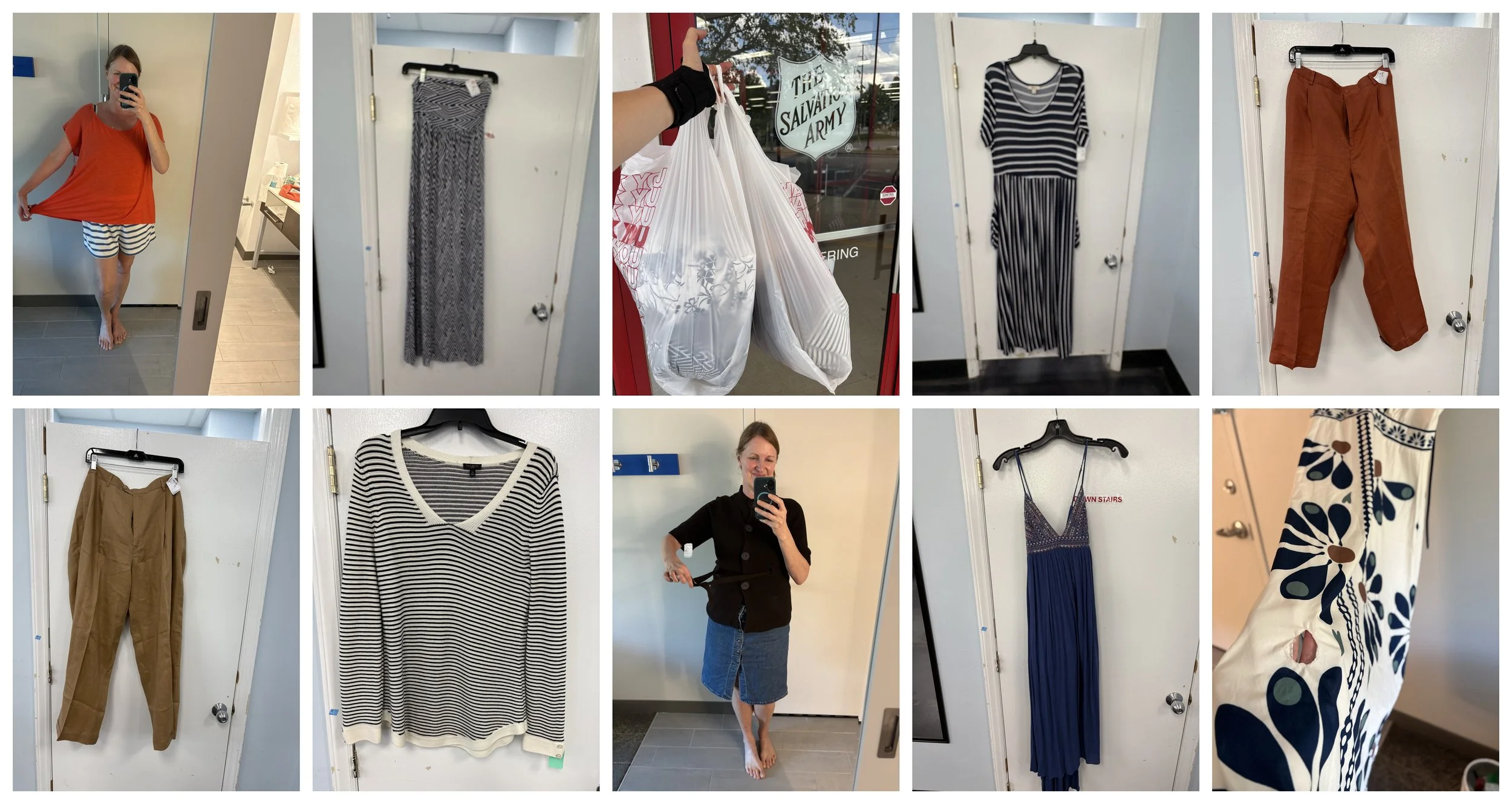
One of my favorite things about learning to sew is discovering that you don't need pristine yardage to make something great.
In fact, lately I've been experimenting with something even better: learning to sew with clothes and textiles that have already had a full life cycle.
For the revised Basic Skills Learn to Sew Series, I've been challenging myself to find thrifted garments that can be transformed into the projects we're learning to make.
Last month, I timed myself at a Salvation Army in downtown Raleigh. In 45 minutes, I found everything I needed for all six basic-skills workshops:
A cotton kimono robe with a stained collar that will become my apron
Four cotton men's shirts in four wonderfully clashing prints that will become a Perfect Tee
A knit maxi dress that will make a perfect Gigi Knit Tee
The total?
Less than $40.
I found enough thrifted fabric for an entire learn-to-sew series. And I snuck in a few treasures.
There's just one little problem with thrifted clothes:
The funk.
Thrift store clothes can carry a distinctive smell from storage, previous wear, perfume, detergent, smoke, or simply years of sitting around with other garments.
Fortunately, you can usually get that thrift store smell out of clothes with a good pretreatment and wash.
Here's my tailor-tested method. I found it first at the Thick-Thrift Diaries on substack. Check Nichole out for a delightful read.
How to Get Thrift Store Smell Out of Clothes
Before you cut into your thrifted finds, wash them thoroughly and make sure they're completely clean and odor-free. You don't want to discover halfway through a sewing project that your "new fabric" still smells like somebody else's laundry room.
1. Give it a presoak
First, deal with any obvious stains.
Rub a little dish soap onto greasy spots or use a stain remover according to its directions. Then soak the garment in a sink, bucket, or other suitable container for anywhere from 15 minutes to several hours, depending on how dingy or smelly it is.
For washable, colorfast fabrics, use warm or hot water - the warmest temperature the fabric can safely handle - and add an unscented oxygen-based bleach, such as OxiClean Free, according to the product directions.
Let it soak, then drain.
There's no need to wring your garments out, and please don't twist them like a rope. That's a great way to stress seams, distort knits, and generally make your future sewing project harder.
Then move everything to the washing machine.
Lazy tailor option: Use your washing machine's soak cycle instead.
A few pointers from the cutting table
Dissolve powdered oxygen bleach first. Powdered products dissolve more easily in warm or hot water than cold water. Follow the product's instructions for the appropriate amount.
Test first. Oxygen bleach products are often labeled color-safe, but that doesn't mean every dye is completely immune to bleeding. Test an inconspicuous area before soaking a particularly precious thrift find.
Don't substitute chlorine bleach. Regular household bleach is a different product and can be much harder on fabrics.
Pay attention to the fabric. Oxygen bleach can be especially useful for garments with dinginess, yellowing, body odor, and certain protein or oil-based stains. This is particularly helpful with knits and garments containing spandex, which can hang on to body oils and odors.
The dingier the garment, the longer you may want to soak it - but even a short soak can help.
What about wool and silk?
Treat wool and silk like the fine fabrics they are.
Skip the oxygen bleach and use cool or lukewarm water with a detergent formulated for delicate fibers, following the care instructions for the garment.
Gently press excess water out rather than wringing. And keep delicate fibers separate from garments that have been treated with oxygen bleach.
2. Wash with detergent
Now it's time for the main wash.
Use your regular laundry detergent and wash according to the garment's care instructions. A warm wash can be useful when the fabric allows it, especially for garments carrying persistent body oils or odors.
For especially stubborn odors, some people use a small amount of clear household ammonia as part of their laundry routine. If you choose to use ammonia, follow the product label carefully and make sure your washer and detergent are compatible with it.
Most importantly:
Never mix ammonia with chlorine bleach or products containing chlorine bleach.
That combination can produce dangerous fumes.
Good ventilation is also a smart idea whenever you're using strong-smelling household cleaning products.
The goal here isn't to make your thrifted clothes smell like ammonia. It's to remove the oils and residues that can trap unpleasant odors in the fibers.
3. Rinse thoroughly
After washing, give your garments a thorough rinse.
If you've used ammonia, an extra rinse is particularly useful for making sure residues are flushed from the fabric.
Some people also use a small amount of white vinegar in the fabric-softener dispenser during a separate rinse cycle. Never combine vinegar and ammonia in the same cycle or container.
At this point, give each garment the ultimate test:
The sniff test.
It should smell clean and neutral - not like a thrift store, somebody else's perfume, smoke, or a science experiment.
If you can still smell the funk, repeat the wash rather than moving on to your cutting table.
4. Dry completely
Now dry your garments according to their care instructions.
Line drying is one of my favorite options because there's nothing quite like the smell of freshly washed fabric that's been allowed to dry in the fresh air.
And, as an added bonus, sunlight can help with some odors and stains.
Just remember that prolonged direct sunlight can fade dyes and damage some fabrics, so don't leave your favorite vintage treasure baking in the sun all afternoon.
For garments that can safely go in the dryer, follow the care label and use the appropriate temperature.
The important part is that your thrifted clothes are completely dry before you store them or start cutting.
And that's it.
Once you've successfully cleaned a thrifted garment, it can go into your regular laundry routine. You shouldn't need to repeat the entire presoak-and-deodorize process every time you wash it.
Still Smell Something? Give It the Vodka Treatment.
A tailor's proverb: As in life, when all else fails - vodka.
Sometimes a vintage garment has a scent that simply refuses to leave.
If you've already washed the garment thoroughly and you're still catching a whiff, try a very light mist of one part vodka to three parts distilled water on the dry garment.
Hang it somewhere with good airflow and let it dry completely.
As the alcohol evaporates, it can help reduce lingering odors.
And before you ask: no, your garment shouldn't smell like a cocktail when you're finished.
Why Bother With Thrifted Clothes?
Because once you get past the funk, thrift stores become an incredible source of sewing material.
You're not limited to the fabric aisle at your local sewing store. You're looking at:
Interesting prints and colors
High-quality natural fibers
Broken-in cottons and linens
Oversized shirts with plenty of usable fabric
Knit garments you can turn into new knit projects
Vintage details you simply can't find on a bolt
Inexpensive fabric for practicing your sewing skills
And perhaps most importantly, you don't have to be afraid of making a mistake.
That last part is a big deal when you're learning to sew.
Learn to Sew With What You Already Have
This is exactly why I revised the Basic Skills Learn to Sew Series.
Learning to sew shouldn't require you to immediately invest in a giant stash of expensive fabric. Sometimes the best way to learn is to start with something inexpensive, experiment, take it apart, make a mistake, and try again.
That's what makes thrifted clothing so much fun.
That $6 men's shirt doesn't have to remain a $6 men's shirt.
It can become a Perfect Tee.
That stained cotton robe can become an apron.
That oversized dress can become something completely new.
You're not just buying secondhand clothing.
You're buying fabric with a past - and giving it another life.
And once you've learned the basic skills, you'll start seeing potential everywhere.
That's the idea behind the Basic Skills Learn to Sew Series: practical sewing skills, approachable projects, and the confidence to look at a piece of fabric - or a piece of clothing - and think:
I could make something with that.
So go find yourself some treasures.
Just give them a good wash first.
And for goodness' sake, give up the funk.